

CFD & Acoustic Optimization of an Industrial Outlet Attenuator
A combined aerodynamic and acoustic assessment of an industrial outlet attenuator, using simulation to compare alternative internal geometries and improve airflow performance while maintaining useful sound attenuation.
Balancing airflow resistance and acoustic performance
The project involved the development of an industrial outlet attenuator for a fan-based ventilation system.
The key engineering challenge was to improve sound attenuation without introducing excessive aerodynamic resistance or poor internal flow behavior.
Several internal splitter arrangements were compared using CFD and indicative acoustic modelling to identify a more balanced design.
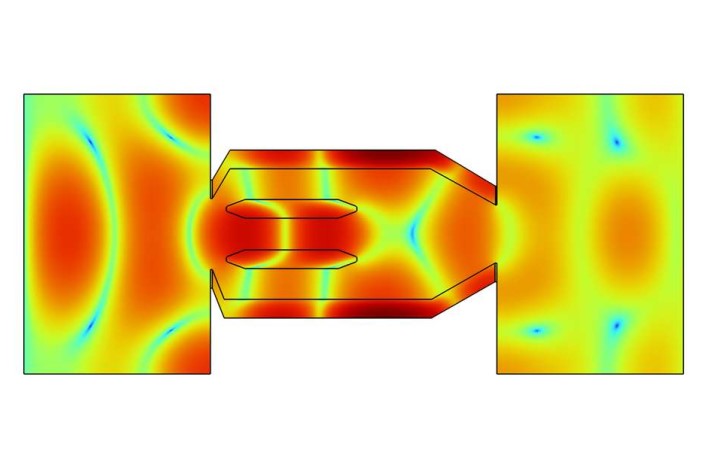
Comparing alternative internal geometries with simulation
Three attenuator concepts were assessed, including a baseline arrangement and modified splitter configurations.
CFD was used to compare airflow distribution, pressure loss and recirculation behavior, while acoustic modelling was used to assess relative attenuation performance across the selected frequency range.
Airflow Distribution
Internal velocity patterns were compared to identify smoother flow paths and reduce unnecessary acceleration through the attenuator.
Pressure Drop
Aerodynamic resistance was assessed across the alternative geometries to identify the lowest-loss arrangement.
Acoustic Performance
Indicative acoustic modelling was used to compare the relative attenuation performance of the different internal concepts.
A more balanced aerodynamic and acoustic configuration
The modified two-splitter configuration produced the most uniform airflow distribution and the lowest pressure drop of the concepts assessed.
The CFD comparison also showed reduced internal recirculation and smoother flow through the attenuator body.
At the same time, the selected configuration maintained useful acoustic attenuation across the target frequency range.
Simulation-led optimization before fabrication
The study demonstrated how CFD and acoustic modelling can be used together to compare competing design concepts before fabrication.
The selected configuration achieved a better balance between airflow resistance, internal flow quality and acoustic attenuation than the initial concept.
This provided a stronger technical basis for progressing the attenuator design toward detailed development and procurement.